Understanding the Principles of TGA: A Quick Guide
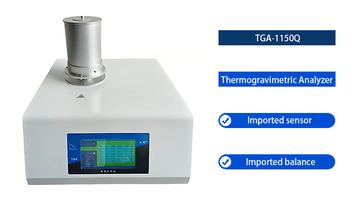
Thermogravimetric Analysis (TGA) is an analytical technique that measures the change in a substance's mass as a function of temperature or time under a controlled program. This method detects physical phenomena (such as melting, sublimation, and adsorption) and chemical reactions (including dehydration, decomposition, oxidation, and reduction) by recording mass loss events on a Thermogravimetric (TG) curve. On this curve, mass is plotted on the vertical axis (decreasing downwards) against temperature or time on the horizontal axis. TGA instruments typically consist of a precision balance, a furnace, a temperature control system, and a data recorder. The core measurement mechanisms rely on either the deflection method, which records beam inclination directly, or the null-point method, which uses an electromagnetic coil to counterbalance mass changes, converting the required restoring current into a precise mass-loss profile.
Mar 23, 2026
• leon