Intelligently Shaping Tomorrow, Advancing Together into a New Era — CHINAPLAS 2026

2026-04-08 AdsaleCPRJ 17
As the world’s premier exhibition for the rubber and plastics industry, this grand event is themed “Innovation · Collaboration · Shaping Sustainability.” It serves as a global hub for innovative elements, comprehensively showcasing cutting-edge technologies and deeply interpreting the industry’s groundbreaking breakthroughs.
Leveraging Shanghai’s unique industrial foundation and exceptional location, the exhibition will build an efficient bridge of cooperation, connecting buyers and exhibitors from around the world.

CHINAPLAS 2026: The Global Gravitational Field for Innovation in the Rubber & Plastics Industry

As the benchmark event for the global rubber and plastics sector, CHINAPLAS 2026 will cover all 16 halls of the National Exhibition and Convention Center (Shanghai) with an exhibition scale exceeding 390,000 square meters. Bringing together over 4,600 high-quality exhibitors from around the world, this record-breaking scale underscores China's increasingly prominent position as a pivotal hub in the global industrial chain.

Continuous Upgrade of Global Industry Chain Connectivity

Looking back at CHINAPLAS 2025 in Shenzhen, the event achieved a scale of over 380,000 square meters and attracted 4,616 exhibitors. The total number of professional visitors reached 281,206, covering 174 countries and regions worldwide. Among them, 68,542 visitors were from Hong Kong, Macao, Taiwan, and overseas markets, accounting for a high proportion of 24.37%. This represents an increase of over 140% compared to the 2023 Shenzhen edition, marking a leapfrog improvement in internationalization.

invitation
Latest News
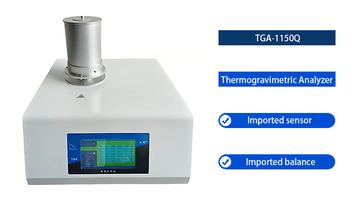
Understanding the Principles of TGA: A Quick Guide
Thermogravimetric Analysis (TGA) is an analytical technique that measures the change in a substance's mass as a function of temperature or time under a controlled program. This method detects physical phenomena (such as melting, sublimation, and adsorption) and chemical reactions (including dehydration, decomposition, oxidation, and reduction) by recording mass loss events on a Thermogravimetric (TG) curve. On this curve, mass is plotted on the vertical axis (decreasing downwards) against temperature or time on the horizontal axis. TGA instruments typically consist of a precision balance, a furnace, a temperature control system, and a data recorder. The core measurement mechanisms rely on either the deflection method, which records beam inclination directly, or the null-point method, which uses an electromagnetic coil to counterbalance mass changes, converting the required restoring current into a precise mass-loss profile.

Mar 23, 2026 • leon

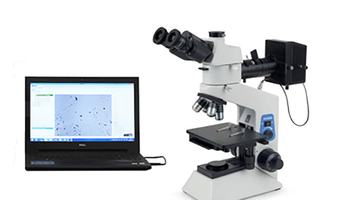
Principles and Features of the Rubber Carbon Black Dispersion Tester: A Complete Guide.
The Rubber Carbon Black Dispersion Tester is a specialized instrument designed in accordance with standard GB-6030 and international standard ISO-11345. Its testing principle is as follows: When rubber (vulcanized rubber or masterbatch) is cut, the undispersed carbon black aggregates, which possess higher hardness relative to the surrounding rubber matrix, cause deviations in the cutting path. This results in a rough and uneven cut surface. Furthermore, the larger the undispersed carbon black aggregates, the greater the surface roughness. Light is projected onto the cut surface at a specific angle. The surface conditions are magnified, directly displayed on the screen, and recorded as digital images. These digital images are processed by a computer. Based on the size and frequency of the protruding clusters on the cut surface, the system automatically evaluates the dispersion rating (Automatic Grading Function) in accordance with relevant standards to characterize the degree of carbon black dispersion in the rubber. Alternatively, the images can be directly compared with standard images stored in the instrument or with user-defined standards (Image Comparison Function).

Mar 23, 2026 • leon

Factors affecting the results of thermogravimetric analysis
The accuracy of Thermogravimetric Analysis (TGA) is governed by five critical experimental parameters. First, sample preparation requires small masses (2–5 mg) and fine particle sizes to minimize temperature gradients and mass transfer resistance, while the crucible material must be chemically inert to prevent reactions with the sample or atmosphere (e.g., avoiding silica crucibles for alkaline samples). Second, the heating rate significantly impacts resolution; faster rates cause thermal lag and shift decomposition temperatures higher, potentially obscuring intermediate steps. Third, the atmosphere composition and flow rate dictate reaction kinetics, where reactive gases (like oxygen) or product gases (like CO₂) can alter decomposition temperatures and oxidation behaviors. Fourth, volatile condensation on cooler parts of the apparatus can lead to erroneous weight measurements, necessitating sufficient gas flow to sweep away evolved gases. Finally, buoyancy effects caused by gas expansion during heating create an apparent weight gain, which must be corrected via blank baseline runs. Careful optimization of these factors is essential for obtaining reliable and reproducible TGA data.

Mar 23, 2026 • leon

Popular Articles
Principles and Features of the Rubber Carbon Black Dispersion Tester: A Complete Guide.
The Rubber Carbon Black Dispersion Tester is a specialized instrument designed in accordance with standard GB-6030 and international standard ISO-11345. Its testing principle is as follows: When rubber (vulcanized rubber or masterbatch) is cut, the undispersed carbon black aggregates, which possess higher hardness relative to the surrounding rubber matrix, cause deviations in the cutting path. This results in a rough and uneven cut surface. Furthermore, the larger the undispersed carbon black aggregates, the greater the surface roughness. Light is projected onto the cut surface at a specific angle. The surface conditions are magnified, directly displayed on the screen, and recorded as digital images. These digital images are processed by a computer. Based on the size and frequency of the protruding clusters on the cut surface, the system automatically evaluates the dispersion rating (Automatic Grading Function) in accordance with relevant standards to characterize the degree of carbon black dispersion in the rubber. Alternatively, the images can be directly compared with standard images stored in the instrument or with user-defined standards (Image Comparison Function).

Mar 23, 2026 • leon

Understanding the Principles of TGA: A Quick Guide
Thermogravimetric Analysis (TGA) is an analytical technique that measures the change in a substance's mass as a function of temperature or time under a controlled program. This method detects physical phenomena (such as melting, sublimation, and adsorption) and chemical reactions (including dehydration, decomposition, oxidation, and reduction) by recording mass loss events on a Thermogravimetric (TG) curve. On this curve, mass is plotted on the vertical axis (decreasing downwards) against temperature or time on the horizontal axis. TGA instruments typically consist of a precision balance, a furnace, a temperature control system, and a data recorder. The core measurement mechanisms rely on either the deflection method, which records beam inclination directly, or the null-point method, which uses an electromagnetic coil to counterbalance mass changes, converting the required restoring current into a precise mass-loss profile.

Mar 23, 2026 • leon

Oxidation Induction Time (OIT) Test
The Differential Scanning Calorimeter (DSC) is the core instrument for conducting Oxidation Induction Time (OIT) tests. This method evaluates the oxidative stability and thermal stability of materials—especially plastics and lubricants—by precisely controlling temperature and gaseous atmospheres.

Mar 18, 2026 • leon


Back
Contact Us

Free Technical
Consultation!

GET STARTED
💬 Free