CPC News 2026W23

2026-06-05 Industry Observation Team Internet 6
A curated collection of news and analysis focusing on industrial upgrading, domestic substitution of key components, and the impact of environmental policies on the chemical supply chain in China.

Chemical Industry

New_Cycle: Transitioning from Scale Expansion to High-end & Green Development

Summary: 2026 is seen as a pivotal turning point for China's chemical industry. With the deepening of "anti-monopoly" policies, the industry is shifting from growth driven by scale to high-end and specialized transformation driven by technological innovation. Particularly in fields like fluorine chemicals, specialty gases, and high-purity electronic chemicals, domestic substitution and demand for premium products are reshaping core competitiveness.
Link: https://www.skysevenchem.com/blog-single.php?id=1022

Breakthrough in Key Projects: Autonomy of Core Raw Materials

Summary: The recent commissioning of several major chemical projects (such as hexamethylene diamine, oxirane propyl ether, and hydrofluoric acid) marks significant progress in breaking "bottleneck" technology barriers. These successes not only alleviate raw material supply pressures for downstream coatings, plastics, and semiconductors but also significantly enhance the risk-resistance of China's high-end chemical industrial chain.
Link: https://www.wsd168.com/news/newsDetail?id=7e0c912eb9af4175aaf208debbef3fd

Coating Industry

High-end Transformation: Driving Growth in Premium Coating Markets

Summary: China's coating industry is undergoing a transition from traditional basic coatings to high-performance and functional coatings. Driven by trends like vehicle lightweighting, smart homes, and industrial automation, premium coatings with superior durability, anti-corrosion properties, and unique aesthetic effects have become the core market demand.
Link: https://www.chinachemnet.com/

Innovation Technology Empowerment: Fusion of Green and Intelligent Technologies

Summary: As environmental regulations tighten, the coating industry is accelerating the adoption of eco-friendly technologies such as low-VOC, water-based, and high-solid content formulas. Simultaneously, intelligent production and digital supply chain management are becoming even more critical tools for enhancing core competitiveness.
Link: Reference Link

Plastic Industry

High-performance Engineering Plastics Leading New Productive Forces

Summary: In the fields of new energy vehicles, aerospace, and advanced manufacturing, the localization of high-performance engineering plastics (such as PPS, PEEK) is accelerating. These materials, known for their high temperature resistance, strength, and chemical stability, are becoming essential base materials supporting "new productive forces."
Link: Reference Link

Breakthroughs in Circular Economy & Plastic Recycling Technologies

Summary: Amid growing global focus on sustainability, China's plastic industry is increasing investment in the efficient recovery and recycling of waste plastics. Through advanced physical, chemical, and biological methods, high-quality recycled plastics are entering broader application fields to support green and low-carbon goals.
Link: Reference Link

Latest News

CPC News 2026W22
CPC News 2026W22
"Green Transition + Cyclical Reversal" Driving High-Quality Development In May 2026, China's coatings, plastics, and chemicals sectors showed positive momentum under the dual influence of policy guidance and market opportunities. Water-based coatings are accelerating substitution, the engineering plastics market has surpassed RMB 196 billion, and the chemical industry is emerging from a four-year downturn into a recovery phase — becoming this week's market focus.

Jun 03, 2026 • Industry Observation Team • Internet
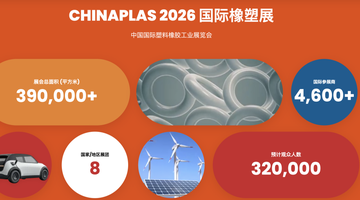
Intelligently Shaping Tomorrow, Advancing Together into a New Era — CHINAPLAS 2026
As the world’s premier exhibition for the rubber and plastics industry, this grand event is themed “Innovation · Collaboration · Shaping Sustainability.” It serves as a global hub for innovative elements, comprehensively showcasing cutting-edge technologies and deeply interpreting the industry’s groundbreaking breakthroughs. Leveraging Shanghai’s unique industrial foundation and exceptional location, the exhibition will build an efficient bridge of cooperation, connecting buyers and exhibitors from around the world.

Apr 08, 2026 • AdsaleCPRJ

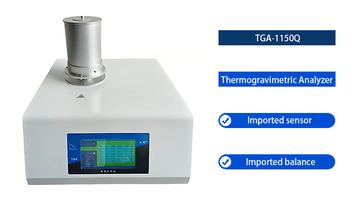
Understanding the Principles of TGA: A Quick Guide
Thermogravimetric Analysis (TGA) is an analytical technique that measures the change in a substance's mass as a function of temperature or time under a controlled program. This method detects physical phenomena (such as melting, sublimation, and adsorption) and chemical reactions (including dehydration, decomposition, oxidation, and reduction) by recording mass loss events on a Thermogravimetric (TG) curve. On this curve, mass is plotted on the vertical axis (decreasing downwards) against temperature or time on the horizontal axis. TGA instruments typically consist of a precision balance, a furnace, a temperature control system, and a data recorder. The core measurement mechanisms rely on either the deflection method, which records beam inclination directly, or the null-point method, which uses an electromagnetic coil to counterbalance mass changes, converting the required restoring current into a precise mass-loss profile.

Mar 23, 2026 • leon

Popular Articles
Intelligently Shaping Tomorrow, Advancing Together into a New Era — CHINAPLAS 2026
As the world’s premier exhibition for the rubber and plastics industry, this grand event is themed “Innovation · Collaboration · Shaping Sustainability.” It serves as a global hub for innovative elements, comprehensively showcasing cutting-edge technologies and deeply interpreting the industry’s groundbreaking breakthroughs. Leveraging Shanghai’s unique industrial foundation and exceptional location, the exhibition will build an efficient bridge of cooperation, connecting buyers and exhibitors from around the world.

Apr 08, 2026 • AdsaleCPRJ

Principles and Features of the Rubber Carbon Black Dispersion Tester: A Complete Guide.
The Rubber Carbon Black Dispersion Tester is a specialized instrument designed in accordance with standard GB-6030 and international standard ISO-11345. Its testing principle is as follows: When rubber (vulcanized rubber or masterbatch) is cut, the undispersed carbon black aggregates, which possess higher hardness relative to the surrounding rubber matrix, cause deviations in the cutting path. This results in a rough and uneven cut surface. Furthermore, the larger the undispersed carbon black aggregates, the greater the surface roughness. Light is projected onto the cut surface at a specific angle. The surface conditions are magnified, directly displayed on the screen, and recorded as digital images. These digital images are processed by a computer. Based on the size and frequency of the protruding clusters on the cut surface, the system automatically evaluates the dispersion rating (Automatic Grading Function) in accordance with relevant standards to characterize the degree of carbon black dispersion in the rubber. Alternatively, the images can be directly compared with standard images stored in the instrument or with user-defined standards (Image Comparison Function).

Mar 23, 2026 • leon

Understanding the Principles of TGA: A Quick Guide
Thermogravimetric Analysis (TGA) is an analytical technique that measures the change in a substance's mass as a function of temperature or time under a controlled program. This method detects physical phenomena (such as melting, sublimation, and adsorption) and chemical reactions (including dehydration, decomposition, oxidation, and reduction) by recording mass loss events on a Thermogravimetric (TG) curve. On this curve, mass is plotted on the vertical axis (decreasing downwards) against temperature or time on the horizontal axis. TGA instruments typically consist of a precision balance, a furnace, a temperature control system, and a data recorder. The core measurement mechanisms rely on either the deflection method, which records beam inclination directly, or the null-point method, which uses an electromagnetic coil to counterbalance mass changes, converting the required restoring current into a precise mass-loss profile.

Mar 23, 2026 • leon


Back
Contact Us

Free Technical
Consultation!

GET STARTED
💬 Free