Oxidation Induction Time (OIT) Test

2026-03-18 leon 17
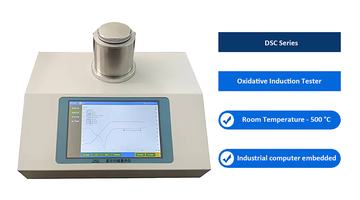
The Differential Scanning Calorimeter (DSC) is the core instrument for conducting Oxidation Induction Time (OIT) tests. This method evaluates the oxidative stability and thermal stability of materials—especially plastics and lubricants—by precisely controlling temperature and gaseous atmospheres.

Abstract

The Oxidation Induction Time (OIT) test, conducted using Differential Scanning Calorimetry (DSC), is a pivotal method for assessing the oxidative stability and thermal resistance of materials, particularly plastics and lubricants. By precisely controlling temperature and atmospheric conditions, the test measures the time interval before a material undergoes autocatalytic oxidation under high temperature and oxygen-rich environments. This comprehensive overview details the fundamental principles of OIT, contrasting the standard Isothermal OIT—which evaluates resistance at a specific temperature—with the Dynamic OIT, which determines the onset oxidation temperature. The document outlines the step-by-step testing protocol, emphasizing sample preparation and data interpretation, while highlighting critical applications in material research, antioxidant formulation, and quality control. Furthermore, it references key international standards, including ISO 11357-6, GB/T 19466.6, and ASTM D3895, ensuring methodological consistency across the polyolefin and cable industries.

Introduction
The Differential Scanning Calorimeter (DSC) is the core instrument for conducting Oxidation Induction Time (OIT) tests. This method evaluates the oxidative stability and thermal stability of materials—especially plastics and lubricants—by precisely controlling temperature and gaseous atmospheres.

Principle of OIT
Oxidation Induction Time (OIT) refers to the time interval during which a material, held at an elevated temperature under an oxygen-rich environment, resists the onset of autocatalytic oxidation. The test determines the initiation point of oxidation by detecting the exothermic heat released during the reaction.
In a DSC test, the heat flow of the sample is monitored under isothermal high-temperature conditions. When oxidation begins, the exothermic reaction produces a distinct inflection point or peak on the DSC curve. The time elapsed from the introduction of oxygen to the appearance of this inflection point is defined as the Oxidation Induction Time.

Test Methods
Depending on the testing conditions, OIT tests are primarily categorized into two methods:

  • Isothermal OIT (Iso-OIT)
    • Procedure: The sample is heated under an inert gas (such as nitrogen) at a specific rate to a set temperature (e.g., 200°C). The atmosphere is then rapidly switched to oxygen or air while maintaining a constant temperature, until the exothermic signal of oxidation is detected.
    • Application: This is the most common method, used to evaluate a material's antioxidant capacity at a specific high temperature.
  • Dynamic OIT (Dynamic-OIT)
    • Procedure: The sample is heated at a constant rate directly in an oxygen or air atmosphere until the DSC curve indicates the onset of oxidation.
    • Application: Used to determine the initial oxidation temperature of the material.

Test Procedure (Example: Isothermal OIT)

  1. Sample Preparation: Cut or grind the material (e.g., pipes, cable compounds) into small pieces or powder. The typical mass is controlled between 5-20mg.
  2. Instrument Setup: Place the sample in the DSC crucible and heat it under an inert atmosphere at a set rate (e.g., 20°C/min) to the test temperature (e.g., 160-220°C).
  3. Atmosphere Switching: Upon reaching the target temperature, maintain isothermal conditions and rapidly switch the purge gas to oxygen, simultaneously starting to record the heat flow curve.
  4. Data Acquisition: The DSC continuously monitors the heat flow until a significant exothermic increase is observed.
  5. Result Evaluation: The time interval from the gas switch to the appearance of the inflection point on the exothermic curve is recorded as the material's Oxidation Induction Time (OIT).

Main Application Areas

  • Material R&D and Evaluation: Assessing the thermal stability and oxidation resistance of polyolefins (e.g., PE, PP), lubricants, and cable materials.
  • Antioxidant Efficiency Evaluation: Screening and optimizing antioxidant formulations by analyzing changes in OIT values after adding different types or concentrations of antioxidants.
  • Quality Control and Lifetime Prediction: Serving as a mandatory inspection index for products like pipes, fittings, and wires/cables to ensure batch consistency and predict material lifespan under real-world aging conditions.

Relevant Testing Standards

  • Chinese National Standard: GB/T 19466.6 (The latest version is under revision, Plan No. 20250416-T-606, modifying ISO 11357-6:2018).
  • International Standard: ISO 11357-6 (Latest version: ISO 11357-6:2025).
  • ASTM Standard: ASTM D3895 (Specifically for polyolefins).
Latest News

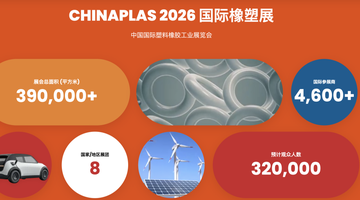
Intelligently Shaping Tomorrow, Advancing Together into a New Era — CHINAPLAS 2026
As the world’s premier exhibition for the rubber and plastics industry, this grand event is themed “Innovation · Collaboration · Shaping Sustainability.” It serves as a global hub for innovative elements, comprehensively showcasing cutting-edge technologies and deeply interpreting the industry’s groundbreaking breakthroughs. Leveraging Shanghai’s unique industrial foundation and exceptional location, the exhibition will build an efficient bridge of cooperation, connecting buyers and exhibitors from around the world.

Apr 08, 2026 • AdsaleCPRJ

Understanding the Principles of TGA: A Quick Guide
Thermogravimetric Analysis (TGA) is an analytical technique that measures the change in a substance's mass as a function of temperature or time under a controlled program. This method detects physical phenomena (such as melting, sublimation, and adsorption) and chemical reactions (including dehydration, decomposition, oxidation, and reduction) by recording mass loss events on a Thermogravimetric (TG) curve. On this curve, mass is plotted on the vertical axis (decreasing downwards) against temperature or time on the horizontal axis. TGA instruments typically consist of a precision balance, a furnace, a temperature control system, and a data recorder. The core measurement mechanisms rely on either the deflection method, which records beam inclination directly, or the null-point method, which uses an electromagnetic coil to counterbalance mass changes, converting the required restoring current into a precise mass-loss profile.

Mar 23, 2026 • leon

Principles and Features of the Rubber Carbon Black Dispersion Tester: A Complete Guide.
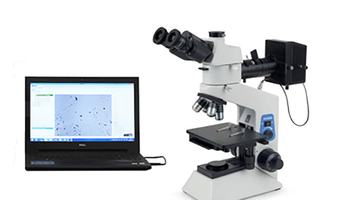
The Rubber Carbon Black Dispersion Tester is a specialized instrument designed in accordance with standard GB-6030 and international standard ISO-11345. Its testing principle is as follows: When rubber (vulcanized rubber or masterbatch) is cut, the undispersed carbon black aggregates, which possess higher hardness relative to the surrounding rubber matrix, cause deviations in the cutting path. This results in a rough and uneven cut surface. Furthermore, the larger the undispersed carbon black aggregates, the greater the surface roughness. Light is projected onto the cut surface at a specific angle. The surface conditions are magnified, directly displayed on the screen, and recorded as digital images. These digital images are processed by a computer. Based on the size and frequency of the protruding clusters on the cut surface, the system automatically evaluates the dispersion rating (Automatic Grading Function) in accordance with relevant standards to characterize the degree of carbon black dispersion in the rubber. Alternatively, the images can be directly compared with standard images stored in the instrument or with user-defined standards (Image Comparison Function).

Mar 23, 2026 • leon

Popular Articles
Principles and Features of the Rubber Carbon Black Dispersion Tester: A Complete Guide.
The Rubber Carbon Black Dispersion Tester is a specialized instrument designed in accordance with standard GB-6030 and international standard ISO-11345. Its testing principle is as follows: When rubber (vulcanized rubber or masterbatch) is cut, the undispersed carbon black aggregates, which possess higher hardness relative to the surrounding rubber matrix, cause deviations in the cutting path. This results in a rough and uneven cut surface. Furthermore, the larger the undispersed carbon black aggregates, the greater the surface roughness. Light is projected onto the cut surface at a specific angle. The surface conditions are magnified, directly displayed on the screen, and recorded as digital images. These digital images are processed by a computer. Based on the size and frequency of the protruding clusters on the cut surface, the system automatically evaluates the dispersion rating (Automatic Grading Function) in accordance with relevant standards to characterize the degree of carbon black dispersion in the rubber. Alternatively, the images can be directly compared with standard images stored in the instrument or with user-defined standards (Image Comparison Function).

Mar 23, 2026 • leon

Understanding the Principles of TGA: A Quick Guide
Thermogravimetric Analysis (TGA) is an analytical technique that measures the change in a substance's mass as a function of temperature or time under a controlled program. This method detects physical phenomena (such as melting, sublimation, and adsorption) and chemical reactions (including dehydration, decomposition, oxidation, and reduction) by recording mass loss events on a Thermogravimetric (TG) curve. On this curve, mass is plotted on the vertical axis (decreasing downwards) against temperature or time on the horizontal axis. TGA instruments typically consist of a precision balance, a furnace, a temperature control system, and a data recorder. The core measurement mechanisms rely on either the deflection method, which records beam inclination directly, or the null-point method, which uses an electromagnetic coil to counterbalance mass changes, converting the required restoring current into a precise mass-loss profile.

Mar 23, 2026 • leon

Intelligently Shaping Tomorrow, Advancing Together into a New Era — CHINAPLAS 2026
As the world’s premier exhibition for the rubber and plastics industry, this grand event is themed “Innovation · Collaboration · Shaping Sustainability.” It serves as a global hub for innovative elements, comprehensively showcasing cutting-edge technologies and deeply interpreting the industry’s groundbreaking breakthroughs. Leveraging Shanghai’s unique industrial foundation and exceptional location, the exhibition will build an efficient bridge of cooperation, connecting buyers and exhibitors from around the world.

Apr 08, 2026 • AdsaleCPRJ


Back
Contact Us

Free Technical
Consultation!

GET STARTED
💬 Free