Determination of Curing Reaction Heat and Glass Transition Temperature of Thermosetting Resins

Determination of Curing Reaction Heat and Glass Transition Temperature of Thermosetting Resins

Determination of the curing reaction heat and glass transition temperature of thermosetting resins is crucial for understanding their characteristics.
2026-04-08 28
Thermoset Curing Reaction Heat DSC Tg Measurement Thermoset
Determination of the curing reaction heat and glass transition temperature of thermosetting resins is crucial for understanding their characteristics.

Detail

Determination of the curing reaction heat and glass transition temperature of thermosetting resins is crucial for understanding their characteristics.

case photo 1

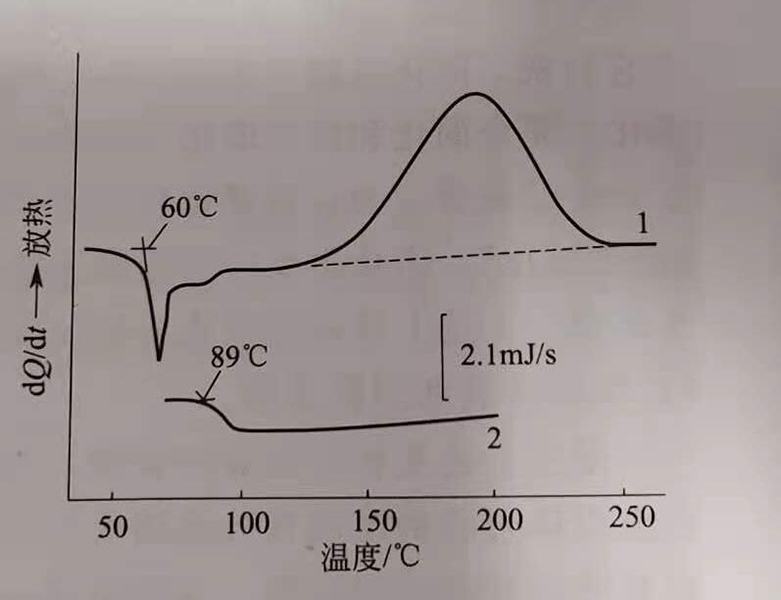
The figure above shows the DSC curve of the epoxy resin curing reaction. In the first heating scan, the DSC curve exhibits a baseline shift indicative of the glass transition near 60°C, and an exothermic peak corresponding to the curing reaction is observed between 120°C and 245°C. After rapid cooling of the sample, the second heating scan shows a higher glass transition temperature due to curing, and the curing exotherm is no longer observed. This indicates that the curing reaction was essentially completed during the first heating cycle.
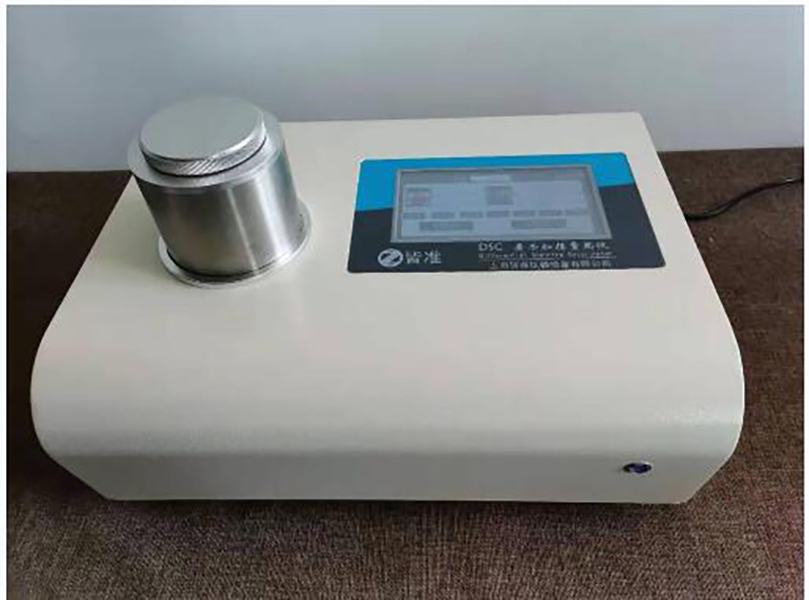
DSC-500C

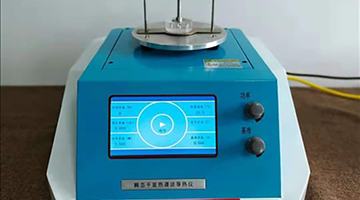
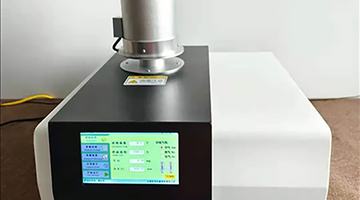
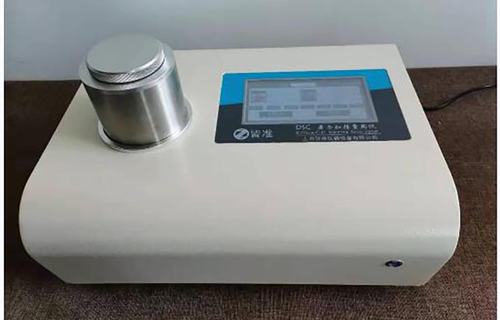
The DSC-500C Differential Scanning Calorimeter is capable of not only testing the curing reaction and glass transition of epoxy resins but also investigating phase transitions in inorganic materials, melting and crystallization processes of polymers, polymorphism in pharmaceuticals, and the solid-to-liquid ratio in fats and other food products. As a classic thermal analysis instrument that measures thermal effects under controlled temperature programs, the DSC-500C from Shanghai Jiezhun has found widespread application in research and development, process optimization, quality inspection and quality control (QC), and failure analysis across various materials and chemical fields.

Key Technical Specifications

DSC Range 0 ~ ± 500mW
Temperature Range Ambient to 500°C
Heating Rate 0.1 to 50°C/min
Temperature Resolution 0.01°C
Temperature Accuracy ± 0.1°C
Temperature Repeatability ±0.1°C
DSC Accuracy ±2%
DSC Resolution 0.001 mW
DSC Sensitivity 0.001 mW
Temperature Control Mode Fully automatic throughout the process
Scan Type Heating scan
Atmosphere Control Mass flow meter
Display 7-inch touchscreen, 24-bit color
Power Supply AC220V, 50Hz/60Hz
Dimensions (W×D×H) 46 × 35 × 27 cm
Net Weight 14.5 kg
Package Dimensions (W×D×H) 58 × 45 × 40 cm
Gross Weight 18 kg
Latest Cases
Determination of carbon black dispersion in plastic pipes
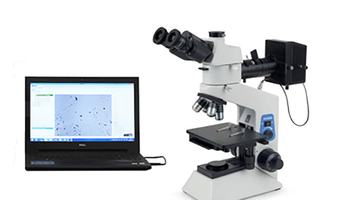
The CBD-500P Carbon Black Dispersion Tester is a premium microscopic image analysis system engineered specifically for the polyolefin industry. Strictly compliant with major international and national standards—including GB/T 18251, ISO 11420, and ASTM D3015—this instrument is designed to precisely measure the dispersion quality of pigments or carbon black in pipes, fittings, and compound materials made of polyethylene (PE), polypropylene (PP), and other polymers.

Mar 23, 2026 16

How the Transient Plane Source (TPS) method differs from other thermal conductivity analyzers
Research on thermally conductive materials in universities is characterized by a high degree of material diversity: In terms of conductivity range: It encompasses everything from thermal insulators to highly conductive materials. In terms of physical form: It covers solids, liquids, powders, and even gases. Since students work on a wide variety of thesis topics, researchers inevitably encounter all these material types. However, since most other thermal conductivity analyzers on the market are often limited to measuring only one specific form of material, a single instrument is rarely sufficient to address the diverse needs of all student projects.

Mar 23, 2026 26

Measurement of carbon black content in rubber using TGA
As a reinforcing filler, carbon black improves the tensile strength, tear strength, and wear resistance of rubber. The physical properties of rubber products are influenced by the loading level, particle size, and structure (shape) of the incorporated carbon black.

Mar 23, 2026 Qingdao University of Technology 10

Popular Cases
How the Transient Plane Source (TPS) method differs from other thermal conductivity analyzers
Research on thermally conductive materials in universities is characterized by a high degree of material diversity: In terms of conductivity range: It encompasses everything from thermal insulators to highly conductive materials. In terms of physical form: It covers solids, liquids, powders, and even gases. Since students work on a wide variety of thesis topics, researchers inevitably encounter all these material types. However, since most other thermal conductivity analyzers on the market are often limited to measuring only one specific form of material, a single instrument is rarely sufficient to address the diverse needs of all student projects.

Mar 23, 2026 26

Determination of carbon black dispersion in plastic pipes
The CBD-500P Carbon Black Dispersion Tester is a premium microscopic image analysis system engineered specifically for the polyolefin industry. Strictly compliant with major international and national standards—including GB/T 18251, ISO 11420, and ASTM D3015—this instrument is designed to precisely measure the dispersion quality of pigments or carbon black in pipes, fittings, and compound materials made of polyethylene (PE), polypropylene (PP), and other polymers.

Mar 23, 2026 16

Measurement of carbon black content in rubber using TGA
As a reinforcing filler, carbon black improves the tensile strength, tear strength, and wear resistance of rubber. The physical properties of rubber products are influenced by the loading level, particle size, and structure (shape) of the incorporated carbon black.

Mar 23, 2026 Qingdao University of Technology 10

Related Products
Featured
TGA-1150Q / TGA-1450Q
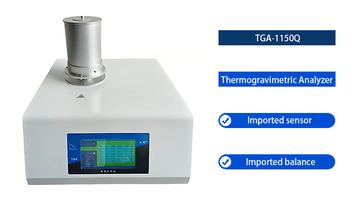
Thermogravimetric Analysis (TG/TGA) is an analytical technique that monitors the mass change of a sample in real time as a function of temperature or time under programmed temperature control (heating, isothermal, or cooling). Its core objective is to study the thermal stability, composition content, and decomposition behavior of materials. It is widely used in research and development, process optimization, and quality control across various fields, including plastics, rubber, coatings, pharmaceuticals, catalysts, inorganic materials, metallic materials, and composite materials.

Updated: Apr 08, 2026

Featured
DSC-500A / DSC-500AZ(OIT)
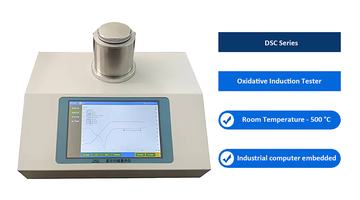
This instrument is the first of its kind in China, specifically designed for Oxidation Induction Time (OIT) testing. It features an embedded 10.1-inch Android industrial computer, eliminating the need for an external PC. The system enables one-button operation for testing both OIT and melting point, automatically generating OIT spectrograms and supporting direct connection to a printer for report and graph output. Upon completion of the automatic OIT test, the instrument issues a beep alert, ensuring a fully unattended process that is both simple and efficient. It complies with a comprehensive range of standards, including GB/T 2951.42-2008, GB/T 15065-2009, GB/T 17391-1998, GB/T 19466-2009, IEC 60811-4-2:2004, and GB/T 19466.6-2009.

Updated: Apr 08, 2026

Automatic Melting Point Apparatus
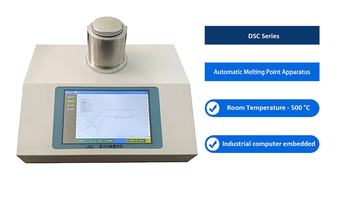
The DSC-500 A Differential Scanning Calorimeter directly measures sample temperature using the differential thermal method. By seamlessly integrating high-precision temperature control technology, it delivers accurate, stable, and reliable test results for users. With automatic detection and real-time graph display, it allows users to easily and accurately determine the sample's melting point and melting range.

Updated: Apr 08, 2026


Back
Contact Us

Free Technical
Consultation!

GET STARTED
💬 Free