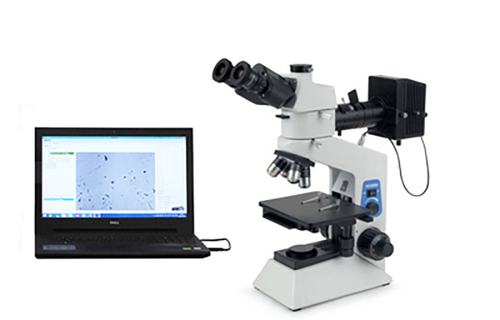
Determination of carbon black dispersion in plastic pipes
The size, morphology, and distribution of carbon black agglomerates in plastic pipes have a significant impact on the quality of the plastic material. Therefore, mastering the method for determining carbon black dispersion is of great practical significance for manufacturers to optimize processes and improve product performance!
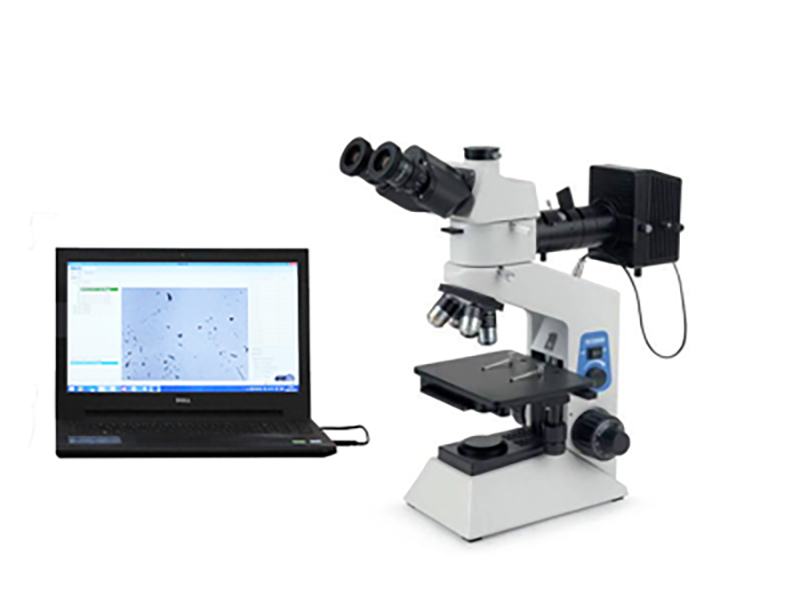
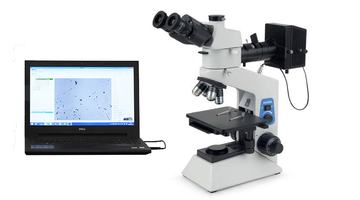
The CBD-500P Carbon Black Dispersion Tester is a premium microscopic image analysis system engineered specifically for the polyolefin industry. Strictly compliant with major international and national standards—including GB/T 18251, ISO 11420, and ASTM D3015—this instrument is designed to precisely measure the dispersion quality of pigments or carbon black in pipes, fittings, and compound materials made of polyethylene (PE), polypropylene (PP), and other polymers.
Detail
Principle
This method is applicable only to polyethylene materials with a carbon black content of less than 3%. A small sample is cut from the pipe, placed between microscope slides, and heated. The treated sample is then observed under a microscope. Image analysis is used to obtain the dimensions of carbon black particles and agglomerates in the image. These dimensions are compared with values in a rating table to determine the rating. The final dispersion rating is determined by the average of the ratings of six specimens! The CBD-500P Carbon Black Dispersion Tester is a testing instrument designed according to the international standard GB/T18251-2000 for detecting pigment or carbon black dispersion in polyolefin pipes, fittings, and compound materials. It measures the size, morphology, and distribution of carbon black agglomerates and particles, the count of particles and agglomerates, and the carbon black dispersion rating.
Technical Features
- Equipped with a transmitted and reflected light upright metallurgical microscope, suitable for microscopic observation of both opaque and transparent objects.
- Equipped with a micrometer scale for convenient and efficient pixel size calibration.
- Clicking on a particle image displays the morphological parameters of that particle.
- The software supports splitting selected carbon black particles, facilitating the separation of two connected carbon black particles or agglomerates.
- The software supports deleting selected carbon black particles.
- The software allows setting two magnification levels: 70x or 100x, facilitating the testing of different materials.
- Adopts a USB 2.0 data interface for better compatibility with computers. The instrument is separate from the computer and can be paired with any computer equipped with a USB interface.
- Supports the export of single particle images.
- The software is compatible with various operating systems, such as XP, WIN7, WIN8, WIN10, etc.
- Measurement results output rich data saved in a database. Users can input arbitrary parameters, such as operator name, sample name, date, and time, for retrieval and analysis.
- The instrument features an aesthetic design, compact size, and lightweight construction.
- High measurement precision, good repeatability, and short measurement time.
Compliance Standards
- ASTM D3015-95: Standard Test Method for Microscopic Testing of Pigment Dispersion in Plastic Blends.
- GB/T 2951.41-2008: Common test methods for insulating and sheathing materials of electric and optical cables.
- ASTM D5596-94: Standard Test Method for Microscopic Analysis of Carbon Black Dispersion in Polyolefin Geosynthetics.
- ISO 11420:1996: Polyolefin pipes, fittings and compounds — Determination of carbon black dispersion.
- ISO 13949:1997: Polyolefin pipes, fittings and compounds — Determination of pigment dispersion.
- GB/T 15065-94: Determination of carbon black dispersion in black polyethylene plastics for electric wires and cables.
- ISO/DIS 18553:1999: Polyolefin pipes, fittings and compounds — Determination of pigment or carbon black dispersion.
- GB/T 13663-2018: Polyethylene (PE) piping systems for water supply (Latest Standard).
- GB/T 15558: Buried polyethylene (PE) piping systems for gas supply.
- GB/T 18742: Polypropylene piping systems for hot and cold water.
- GB/T 18251: Determination of pigment or carbon black dispersion in polyolefin pipes, fittings and compound materials.
Technical Specifications
- Detection Range: 1µm - 1cm
- Camera: 5-megapixel high-definition microscope camera
- Sample Aperture: 4mm
- Optical Magnification: 100x
- Image Size: 2048*1368 or 2592*1944 pixels
- Power Supply: 220V / 2A / 50Hz
Latest Cases
How the Transient Plane Source (TPS) method differs from other thermal conductivity analyzers
Mar 23, 2026 158
Measurement of carbon black content in rubber using TGA
Mar 23, 2026 Qingdao University of Technology 105
Determination of Curing Reaction Heat and Glass Transition Temperature of Thermosetting Resins
Mar 18, 2026 173
Popular Cases
Determination of Curing Reaction Heat and Glass Transition Temperature of Thermosetting Resins
Mar 18, 2026 173
How the Transient Plane Source (TPS) method differs from other thermal conductivity analyzers
Mar 23, 2026 158
Measurement of carbon black content in rubber using TGA
Mar 23, 2026 Qingdao University of Technology 105
Back