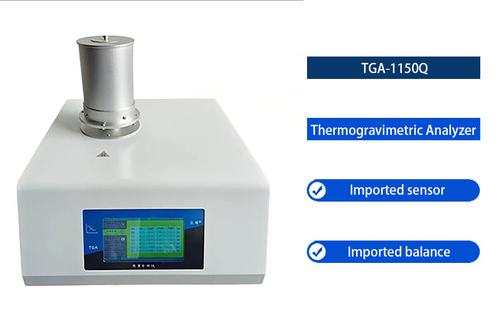
TGA-1150Q / TGA-1450Q
Thermogravimetric Analyzer
Detail
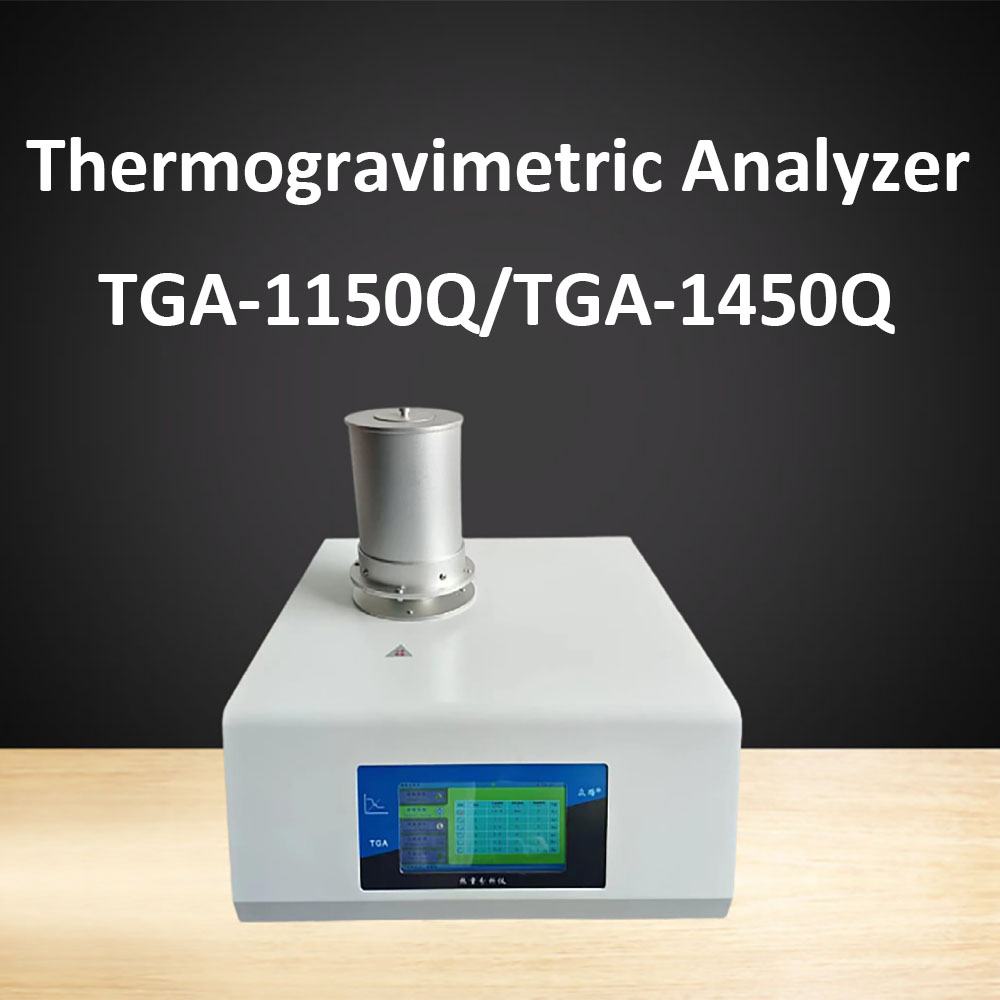
Main Features: simple operation, accurate data
- Industrial-grade wide-screen touch structure, rich display information, including set temperature, sample temperature, oxygen flow rate, nitrogen flow rate, differential heat signal, various switch states, flow zeroing.
- Uses imported brand balance, sensitivity of 0.01mg (one hundred thousandth of a gram).
- Compact furnace structure, heating/cooling rate 0.1-100°C arbitrarily adjustable.
- Supports user self-programming, realizing fully automated measurement steps. The software provides dozens of instructions, users can flexibly combine instructions according to their own measurement steps and save them. Complex operations are simplified into one-key operations.
- Detachable sample holder, interchangeable to meet different needs, convenient for cleaning and maintenance after sample contamination.
- Integrated fixed furnace structure, no need for up and down movement, convenient and safe.
Model Selection
TGA-1150Q: Room Temp - 1150°C
TGA-1450Q: Room Temp - 1450°C
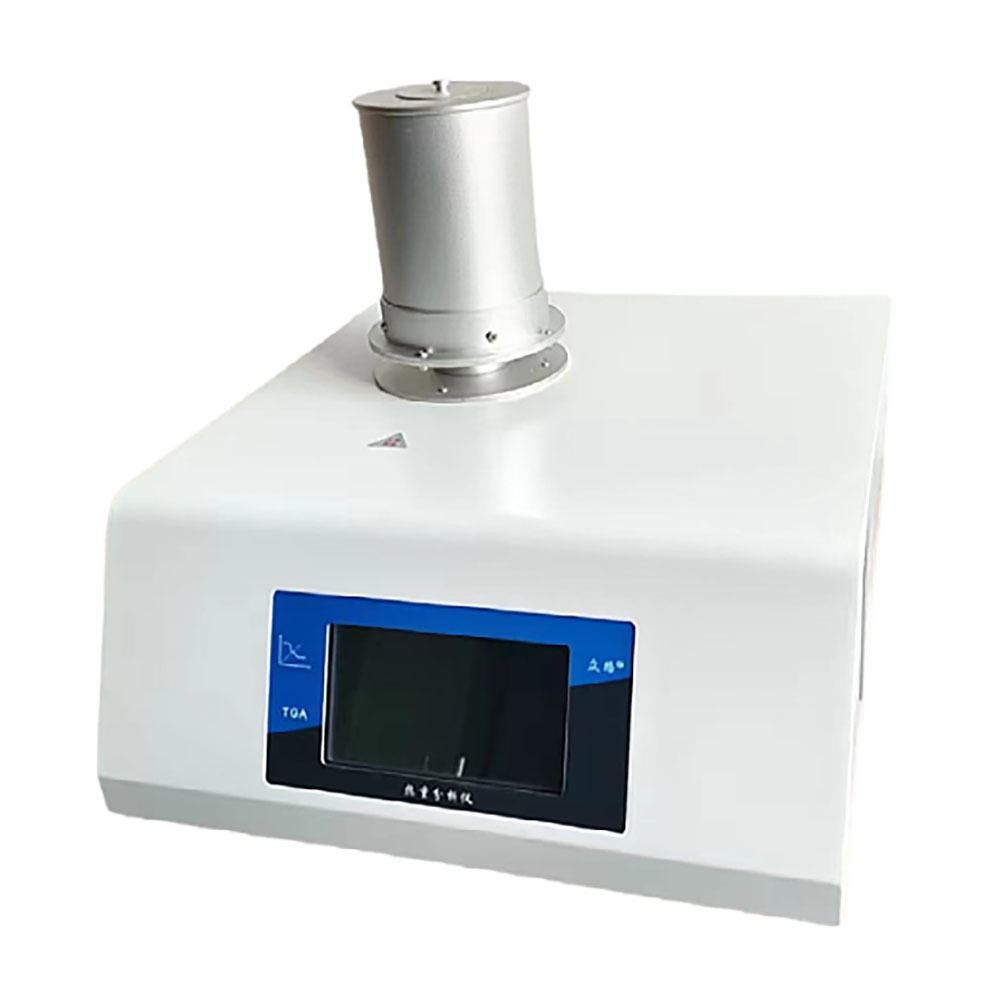
Parameters
| Temperature Range | Room Temp - 1150 / 1450°C |
|---|---|
| Temperature Resolution | 0.01°C |
| Balance Measurement Range | 0.01mg - 3g (Expandable to 50g) |
| Thermogravimetric Resolution | 0.01mg |
| Power Supply | AC220V 50Hz/60Hz (Customized) |
| Crucible Size | Diameter 7.3mm * 6.3mm |
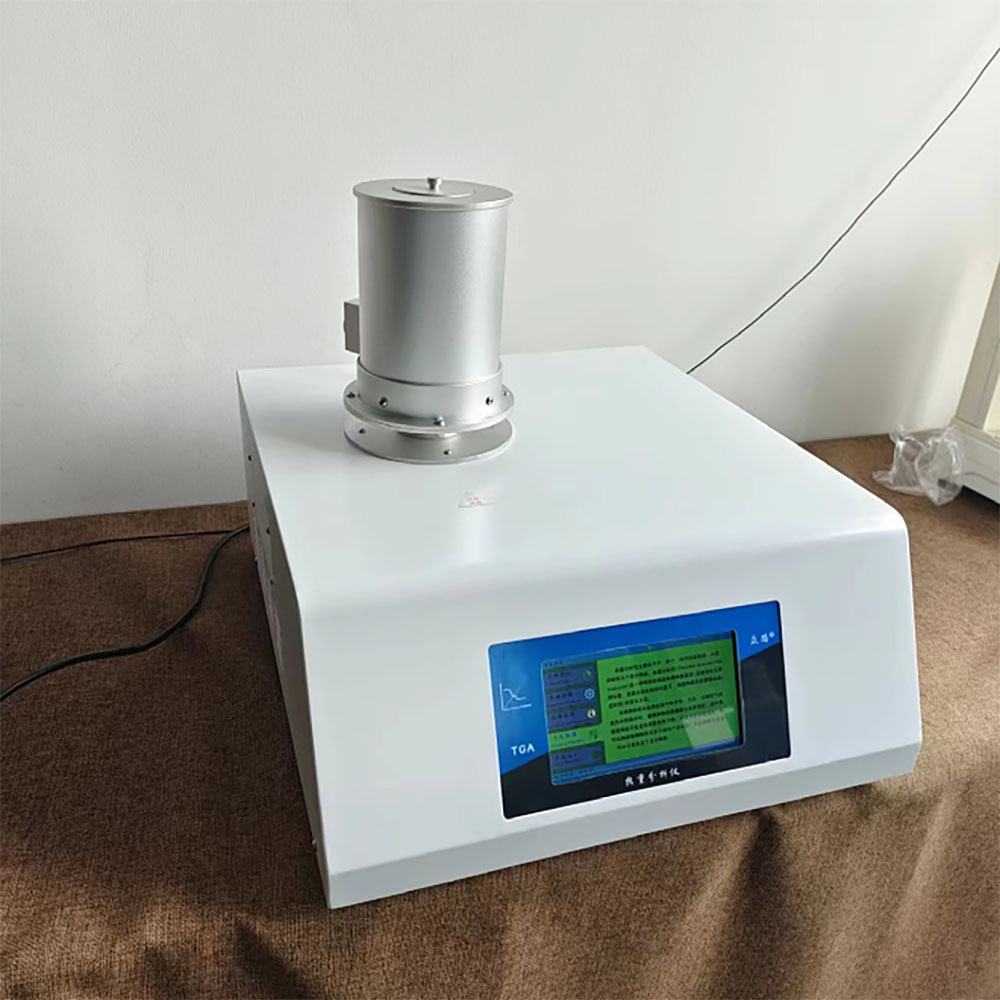
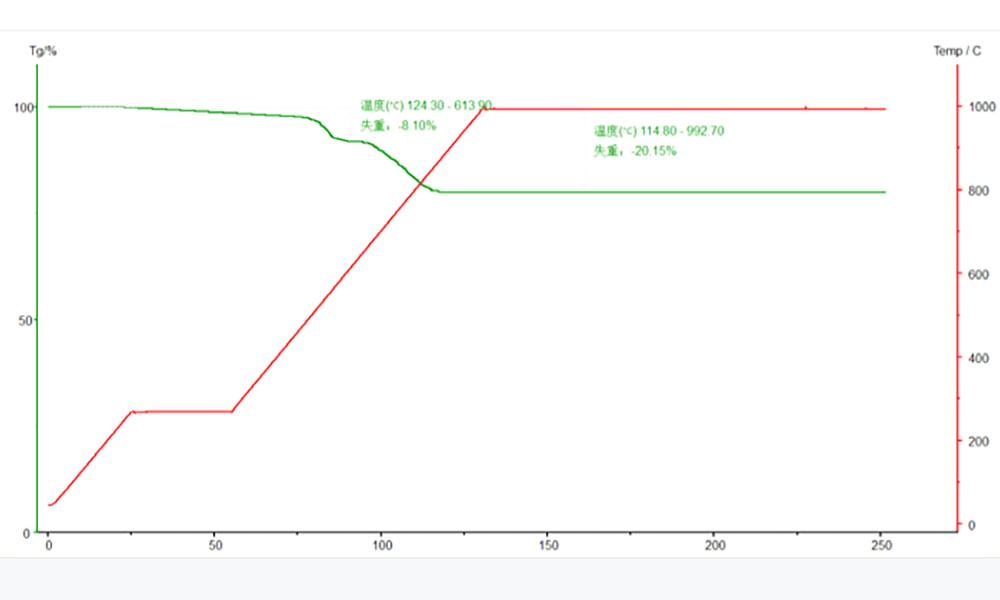
Technical Features:
- Industrial-grade widescreen touch structure with rich display information, including set temperature, sample temperature, oxygen flow rate, nitrogen flow rate, differential thermal signal, various switch states, and flow zeroing.
- Gigabit Ethernet communication interface with strong universality, reliable communication without interruption, and support for auto-recovery connection functionality.
- Uses an imported balance with a sensitivity of 0.01mg (one hundred thousandth of a gram).
- Compact furnace structure with a heating/cooling rate arbitrarily adjustable from 0.1 to 100°C.
- Automatic switching of flow meters for two gas channels, featuring fast switching speed and short stabilization time.
- Standard sample and spectrum included as standard, convenient for customers to calibrate the isothermal coefficient.
- Software adapts to computer screens of various resolutions, automatically adjusting the display mode of curves according to the screen size. Supports laptops and desktops; supports operating systems such as Win2000, XP, VISTA, WIN7, WIN8, and WIN10.
- Supports user self-programming to achieve fully automated measurement steps. The software provides dozens of instructions, allowing users to flexibly combine and save instructions according to their own measurement steps. Complex operations are simplified into one-click operations.
- Integrated fixed furnace structure eliminates the need for vertical lifting, making it convenient and safe.
- Detachable sample holder can be replaced to meet different needs, making cleaning and maintenance convenient after sample contamination.
- Lower-pan balance weighing system based on the principle of electromagnetic force balance.
Technical Parameters:
- Temperature Range: Room temperature - 1150 / 1450°C
- Temperature Resolution: 0.01°C
- Temperature Fluctuation: ± 0.01°C
- Heating Rate: 0.1 to 100°C/min
- Isothermal Temperature: Room temperature - 1150 / 1450°C
- Temperature Control Method: Heating, isothermal, cooling
- Balance Measurement Range: 0.01mg - 3g (expandable to 50g)
- Thermogravimetric Resolution: 0.01mg
- Balance Model: Mettler (Swiss), 0.01mg (one hundred thousandth of a gram), capable of identifying weight changes in trace samples
- Isothermal Time: 0 to 300min arbitrarily settable (when temperature > 1000°C, isothermal time is recommended to be less than 30min)
- Gas Control: Two gas channels, Nitrogen and Oxygen (automatic switching by instrument)
- Power Supply: AC220V 50Hz or 60Hz or customized
- Data Interface: Standard USB interface, dedicated software (software upgraded free of charge periodically)
- Crucible Dimensions (Height * Diameter): Diameter 7.3mm * 6.3mm
- Imported chips, imported sensors
- Replaceable holder, convenient for disassembly and cleaning
- Power: 1000W
Package Contents:
- Main Unit: 1 set
- Software: 1 set
- Power Cord: 1 piece
- Data Cable: 2 pieces
- Crucibles: 200 pieces
- Standard Substance: 1 set of Tin
- 10A Fuse: 2 pieces
- Tweezers: 1 pair
- Ear Syringe (Bulb): 1 piece
- Sample Spoon: 1 piece
- Gas Tubing: 2 pieces
- PTFE Tape: 1 roll
- Counterweight: 1 piece
- Screws: 4 pieces
- Sensors: 2 pieces
- Furnace Covers: 1 large and 1 small
- Manual and Certificate of Conformity: 1 set
Overview
The Thermogravimetric Analyzer (TGA) is a sophisticated analytical instrument designed to measure changes in the mass of a sample as a function of temperature or time under a controlled atmosphere. This technique, known as Thermogravimetric Analysis, is fundamental to understanding the thermal stability, composition, and decomposition behavior of various materials.
The instrument operates by placing a sample within a precision furnace equipped with a high-sensitivity microbalance, such as the featured Mettler-Toledo model with a resolution of 0.01mg. As the sample is subjected to a programmed temperature regime—which can include heating, cooling, or isothermal holding—the balance continuously records mass variations. These changes are typically associated with physical phenomena like evaporation, sublimation, and desorption, or chemical processes such as oxidation, reduction, and thermal decomposition.
A key strength of this TGA system lies in its robust engineering and advanced control capabilities. It features an industrial-grade wide-screen touch interface for intuitive operation and a compact, integrated furnace structure that ensures stability and safety. The system supports a wide temperature range, extending up to 1450°C, with highly adjustable heating and cooling rates from 0.1 to 100°C/min. Furthermore, its automated dual-gas control system allows for seamless switching between inert (e.g., Nitrogen) and reactive (e.g., Oxygen) atmospheres, providing critical insights into a material's behavior under different environmental conditions.
The TGA is an indispensable tool across a broad spectrum of industries, including polymer science, pharmaceuticals, catalysis, and materials engineering. By generating precise thermogravimetric curves, it empowers researchers and quality control professionals to optimize manufacturing processes, ensure product consistency, and develop new materials with tailored thermal properties.
Related Articles
Factors affecting the results of thermogravimetric analysis
Published: Mar 23, 2026
Understanding the Principles of TGA: A Quick Guide
Published: Mar 23, 2026

CPC News 2026W22
Published: Jun 03, 2026
Related Cases
Measurement of carbon black content in rubber using TGA
Published: Mar 23, 2026
Determination of Curing Reaction Heat and Glass Transition Temperature of Thermosetting Resins
Published: Apr 08, 2026
Back